
How to Raise a Genius: The Polgár Story, Explained Simply
A dad had a bold idea. Three daughters changed chess. Let’s explore what the Polgár story—and Mozart’s musical household—can actually teach us.
Genius: fact or fiction?
Have a guess before reading. You’ll get an explanation after each answer.
All three Polgár sisters hold the open Grandmaster title.
False. Susan and Judit hold GM titles. Sofia holds IM and WGM titles. All three achieved an exceptional standard.
Mozart grew up surrounded by musical teaching and talented family members.
True. Leopold taught Wolfgang and Nannerl, who was an accomplished musician too. That environment belongs in the story.
Three successful sisters prove the same approach guarantees the same outcome for every child.
False. A remarkable family offers valuable evidence and questions, but it cannot establish a guarantee for everyone.
A parent has to be a Grandmaster to help a beginner enjoy chess.
False. You can explore the basics together and seek suitable teaching as needed. Sofia says her parents were not strong chess players.
A learning plan should include the learner’s own interests and choices.
True. Ask what they enjoy, what they want to try, and when they need a break. The plan should serve the person using it.
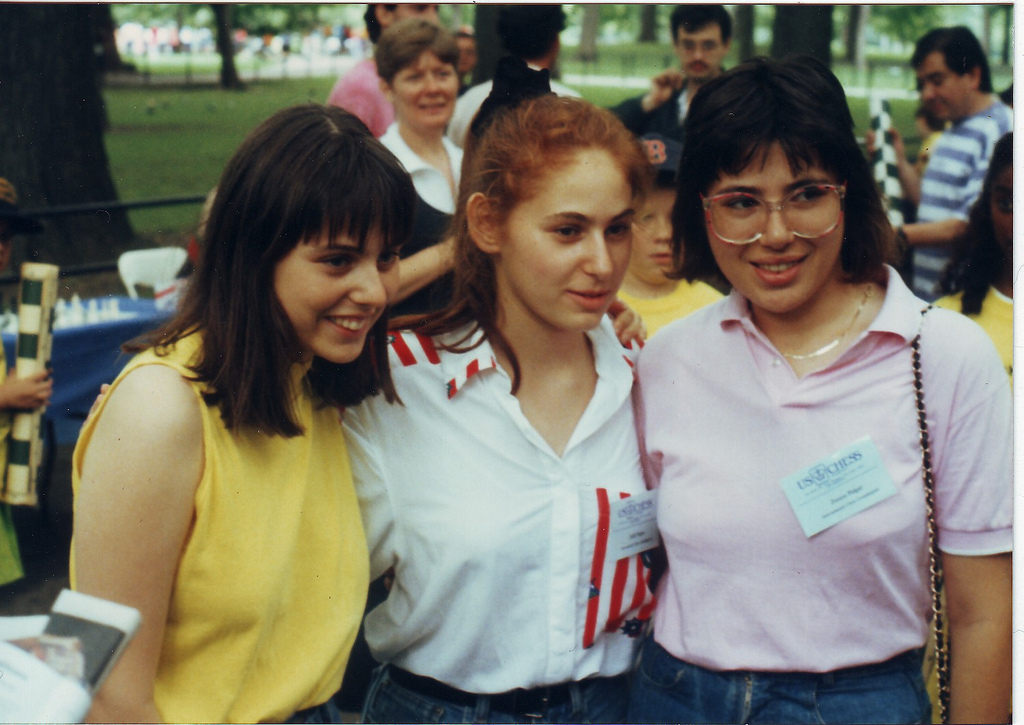
Three sisters.
One big question.
What happens when a childhood makes room for serious learning?
Susan, Sofia and Judit became remarkable chess players. The story behind the results is even more interesting.
Jump to the good bits
So, imagine deciding you want to raise a genius before you’ve even become a parent.
Ambitious? Definitely. A little more complicated than buying a tiny chessboard and hoping for the best? Oh yes.
That was the idea behind László Polgár’s remarkable family story. Together with his wife, Klára, he helped three daughters become exceptional chess players. Their names were Susan, Sofia and Judit.
But here’s the interesting question: when we call somebody a genius, how much of the story are we missing?
We see the brilliant move. We hear the beautiful music. We don’t always see the teacher, the patient parent, the practice session or the opportunity that made the performance possible.
Let’s explore Polgár’s ideas, take a little musical detour with Mozart, and work out what an ordinary chess-loving family can actually take away from all this. No grandmaster certificate required. ♟️
Who was László Polgár, and what was his big idea?
László Polgár was a Hungarian educator with an unusually ambitious view of children’s potential. His daughter Sofia explains that his educational vision existed long before the sisters were born.
He believed that exceptional ability could be developed through education, beginning early and concentrating deeply on a particular subject. Chess became that subject in their family. Sofia describes the family’s approach on her own website.
In everyday language, the question was: what might happen if learning something became a central, carefully supported part of childhood?
Think about learning a language. A child surrounded by conversations gets opportunities to listen, try, make mistakes and try again. They aren’t waiting for one special lesson each month.
That’s a useful comparison for understanding a learning environment. It is our analogy, rather than a claim that learning chess and learning a language are identical.
And what about Klára Polgár?
A story about one visionary father makes a tidy headline. A family is rather more complicated.
Sofia credits both parents’ teaching, love, devotion and work. Klára belongs at the centre of the account, alongside László and the daughters themselves.
The sisters also had to do the learning and playing. They weren’t chess pieces being moved around somebody else’s board.
Raise a Genius! at a glance
| The detail | What it means |
|---|---|
| Author | László Polgár, a Hungarian educator and the sisters’ father. |
| Original title | Nevelj zsenit! English titles include Raise a Genius! and Bring Up Genius! |
| Published | 1989. The family’s experiment was already under way. |
| Format | An interview with Endre Farkas. Original-edition record. |
| Central question | How much can early teaching, sustained study and a supportive environment help a child develop? |
How did the Polgár story unfold?
Tap a moment to follow the story, from an educational question to three remarkable chess careers.
- The idea: What if ability could be developed?. László’s educational vision came before the family experiment. The interesting question was what sustained teaching and opportunity might help a child achieve.
- The family: Klára belongs in the story too. Both parents taught and supported the sisters. Sofia credits their love, devotion and hard work. The daughters themselves did the learning, practising and competing.
- 1988: Three sisters, one remarkable photograph. Sofia, Judit and Susan at a public chess event in Central Park, New York. This photograph captures a moment in the family’s story, rather than the whole experience of their childhood.
- 1989: An account of an experiment already under way. Nevelj zsenit! was published in 1989. The book describes an approach the family had already been living; it wasn’t published before the sisters were born.
- 1991: Susan and Judit earn GM titles. Both earned the open Grandmaster title in 1991. Sofia holds the International Master and Woman Grandmaster titles. Their achievements are extraordinary, and the titles are different.
- Your turn: What would make learning easier today?. An accessible board, one interesting challenge, helpful feedback and a learner who wants to take part. You don’t need to plan an elite career to make room for curiosity.
The Polgár sisters: three players, three different stories
Before we get carried away, let’s clear up a detail that often gets muddled.
Susan and Judit became Grandmasters. Sofia holds the International Master and Woman Grandmaster titles. Those are different chess titles. All three sisters achieved an extraordinary standard.
If the alphabet soup of chess titles is already making your head spin, just remember this: GM and WGM aren’t interchangeable labels.
The Polgár sisters: who achieved what?
| Player | Chess titles | Why chess fans remember her |
|---|---|---|
| Susan Polgár | Grandmaster (1991) | Women’s world champion; the first woman to earn the open GM title through the required norms and rating. Official biography. |
| Sofia Polgár | International Master and Woman Grandmaster (1990) | An exceptional player with her own achievements and interests. IM, WGM and GM are different titles. FIDE record. |
| Judit Polgár | Grandmaster (1991) | Became GM at 15 years and four months; later reached the world’s top ten across all players. FIDE profile. |
Calling Sofia an unsuccessful version of somebody else would be a spectacularly bad way to understand this family. And probably an excellent way to lose a chess game against her.
The wider lesson about girls and opportunity is hard to miss: assumptions about who belongs at a chessboard can close doors before a child even gets a chance to play.
Mozart and other prodigies: what happened before the applause?
Let’s leave the chessboard for a moment.
When somebody says “Mozart,” you probably imagine a small musical superhero who arrived knowing what every piano key was for.
The real childhood is more interesting.
Mozart: a childhood surrounded by music
Wolfgang Amadé Mozart grew up in a musical household. His father, Leopold, was a composer, musician and teacher who taught Wolfgang and his older sister, Maria Anna, known as Nannerl.
Nannerl was an accomplished player too. The siblings performed, and their family’s travels brought Wolfgang into contact with musical life beyond his home city. The Mozarteum Foundation describes their education and family background.
That doesn’t make Mozart’s achievements ordinary. It makes the starting conditions visible.
Here’s a thought experiment: imagine two children who enjoy making sounds. One has lessons, instruments, musical conversations and chances to perform. The other rarely has access to an instrument.
We couldn’t use that imagined comparison to calculate either child’s potential. We could see that they have very different opportunities to develop it.
Mozart is our independently sourced comparison, rather than an example attributed to Polgár’s book.
Meet Mozart’s musical household
Choose a person in the portrait. There’s more to this family than one famous name.
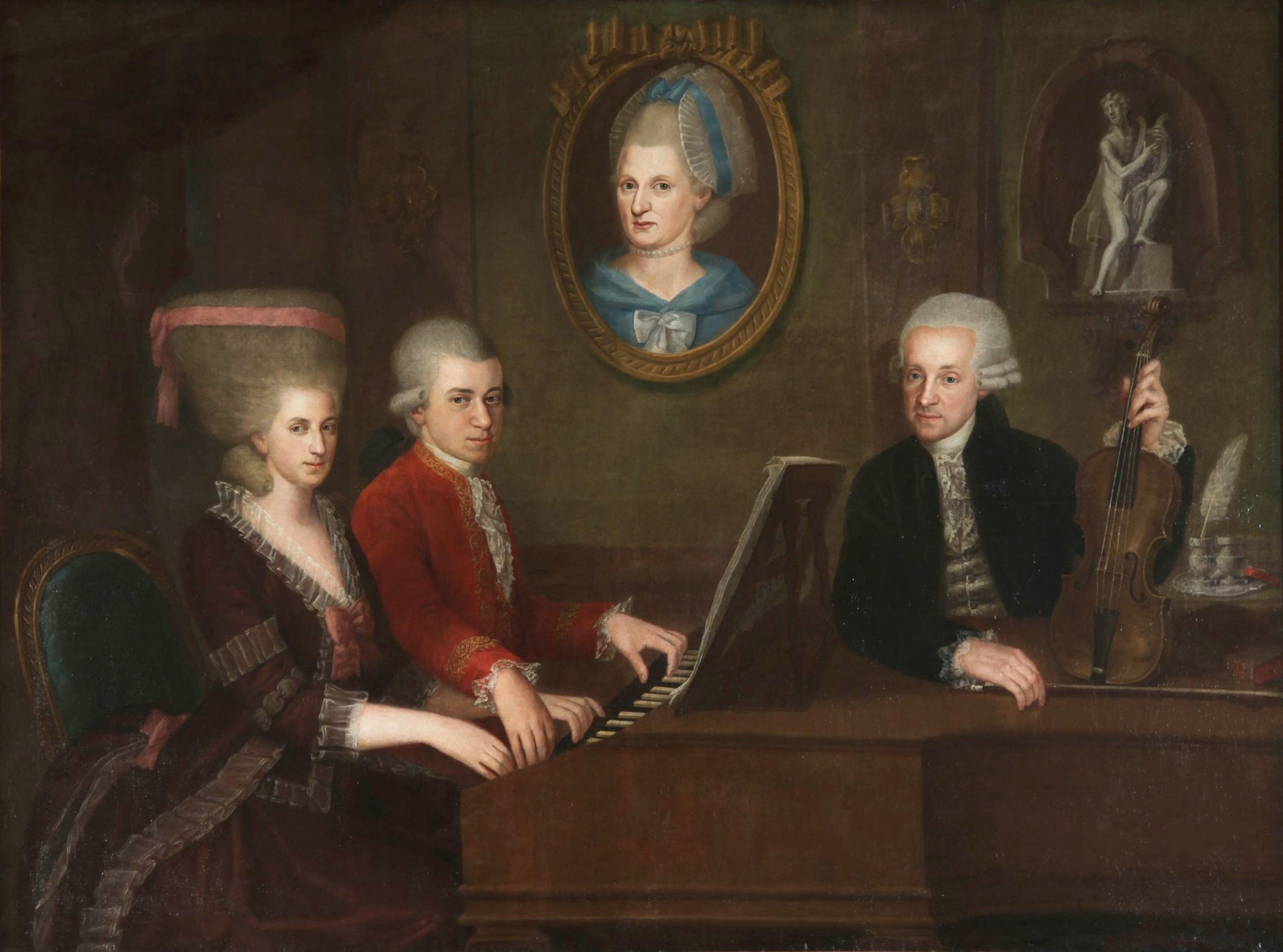
A little time-travel warning: this portrait dates from around 1780. Wolfgang is an adult here; it helps us identify the family, rather than showing his childhood lessons.
- Maria Anna “Nannerl” Mozart. Wolfgang’s older sister was an accomplished keyboard player. The family story includes a talented sibling to learn alongside, as well as a famous younger brother.
- Wolfgang Amadé Mozart. He received early music teaching in a musical family. This portrait dates from around 1780, when he was an adult; it is not a picture of his childhood.
- Leopold Mozart. Their father was a composer, musician and teacher. He taught both children and organised opportunities for them to perform.
- Anna Maria Mozart. The children’s mother appears in the portrait on the wall. She had died before this family painting was made.
Johann Nepomuk della Croce, Mozart family, c.1780. Wolfgang is an adult in this portrait. Wikimedia Commons, public domain. Family background: Mozarteum Foundation.
Behind three famous musical names
| Musician | Support around the talent | What to notice |
|---|---|---|
| Mozart | A musician father, early lessons, a talented sister and opportunities to perform. | Learning was part of family life. Mozarteum Foundation. |
| Felix Mendelssohn | Musical instruction and family performances with access to hired musicians. | An idea needs somewhere to be tried out. Mendelssohn Society. |
| Yehudi Menuhin | An involved family and early teachers including Sigmund Anker and Louis Persinger. | The person in the spotlight had teachers behind him. Menuhin Foundation. |
Mendelssohn and Menuhin are among the musicians Polgár discusses. Mozart is our independently sourced comparison. These are different lives, with different opportunities—not three copies of the same experiment.
This also brings money and access into the picture. “Provide opportunities” can mean very different things in different households.
So, were these geniuses just products of their environment?
That conclusion would go further than these stories allow.
The examples show teaching, family involvement and opportunity alongside extraordinary achievement. They don’t tell us exactly what would have happened to the same children in different circumstances.
Think of a biography as a very detailed look at one game. It can reveal wonderful moves. It can’t, by itself, explain every possible game of chess.
Mozart had talent. He also had Leopold.
The achievement makes the headline. The people and opportunities around it belong in the story too.
| What was around them? | Mozart | The Polgár sisters |
|---|---|---|
| Teaching | Leopold’s music lessons | Parents, study and chess instruction |
| Learning together | A talented older sister, Nannerl | Three sisters sharing a chess environment |
| A chance to try | Concerts and travel | Games and competition |
Five things you can actually make room for
Curiosity
Start with an interesting question.
Opportunity
Keep the tools within reach.
Practice
Try one small challenge.
Feedback
Find out why a move works.
Rest & play
Make room for life beyond it.
Useful ingredients. No guaranteed genius. These stories show support alongside achievement; they cannot tell us exactly how much each influence contributed.
How did the Polgár sisters learn chess?
Polgár’s account describes sustained study, chess problems, competition and adult involvement. His proposed approach involved far more time and specialisation than a casual after-school chess club.
There was also a wider education. In the book, he discusses languages, physical activity and family life alongside chess.
Why choose chess? One useful feature is that you can test ideas against an opponent and see results. A beautiful-looking plan might still lose your queen. The board has a rather direct way of providing feedback.
But we should keep two questions separate: “What did this family do?” and “What should my family do?”
A historical account of intensive training isn’t automatically an appropriate schedule for a particular child. Your child has their own interests, needs and voice in the matter.
László Polgár’s main ideas, explained simply
A few themes help make the book less intimidating: early learning, depth in a chosen subject, close educational involvement and the relationship between achievement and a fulfilling life.
The short illustrations below are our way of explaining those themes. They aren’t quotations from the book or a reconstruction of the sisters’ lessons.
From a big idea to a small chess activity
| The idea | Try this | Ask this |
|---|---|---|
| Make starting easy | Leave a board within reach. Begin with one piece. | “Where can this rook go?” |
| Choose one skill | Look for a knight fork instead of trying to “get better at everything”. | “Can one piece attack two targets?” |
| Make feedback useful | Reset the position after a mistake. Explore what changed. | “What can their bishop capture now?” |
| Keep the learner involved | Offer a puzzle, a game, something different or a break. | “Which part would you like to try?” |
A rating graph can tell you about results. It cannot tell you whether a child enjoyed the session. Ask them. A small plastic horse is a surprisingly good conversation starter.
One knight. Two very unhappy pieces.
White to move. Can you move the knight so it attacks the black king and queen at once?
Tap a destination square. On a keyboard, focus the board, use the arrow keys, then press Enter.
An original one-move teaching exercise. It isn’t a chess engine or an intelligence test.
See the answer
Move the knight from d5 to e7. It checks the king on g8 and attacks the queen on c6.
Are geniuses born or made? What the story can tell us
The Polgár family makes it hard to dismiss the importance of sustained educational support. It also leaves questions that one family’s experience cannot answer.
There wasn’t a matching second Polgár family, with identical children, living a different childhood for comparison. The sisters shared both family relationships and a learning environment.
We also tend to hear about remarkable successes more often than equally committed people who reached a different level. That makes “copy the winners” a shaky guarantee.
A useful takeaway is to ask what conditions might help a particular person learn. Promising to manufacture the same outcome is a much bigger claim.
What the story shows—and what it cannot prove
| The claim | A more careful answer |
|---|---|
| “Support and opportunity matter.” | The sisters’ accounts describe teaching, commitment and a shared learning environment alongside exceptional achievement. |
| “Copy the schedule and get the same result.” | One family cannot establish a guarantee for every child. The sisters shared both family relationships and a learning environment. |
| “Chess improves everything.” | Playing strength and improvement in unrelated activities are different questions. Research on transfer needs careful interpretation. |
| “A rating measures intelligence.” | A rating estimates chess playing strength in its particular system. It is not an IQ score. |
Does chess make you smarter at everything?
This is where we need to resist giving our favourite game a superhero cape.
Getting better at chess and improving unrelated abilities are different questions. Researchers call improvement carrying across to another activity transfer.
A 2016 meta-analysis by Giovanni Sala and Fernand Gobet found promising average results across studies of chess instruction, but also important weaknesses in study design. The authors warned that the available evidence could not rule out alternative explanations such as placebo effects. Read the research abstract and findings.
So we should be cautious about promises that chess automatically improves intelligence, school performance or every decision in life. Enjoying the game and developing chess skill are already worthwhile reasons to play.
What did the Polgár sisters think of their upbringing?
The daughters’ own accounts deserve space alongside their father’s theory.
Sofia writes warmly about both parents and credits their commitment to the sisters’ success. That is valuable testimony from someone who lived the experience.
It is also Sofia’s account. It shouldn’t be turned into a claim that all three sisters experienced every part of childhood identically, or that every child would enjoy the same approach.
There’s a broader lesson here for any parent fascinated by this story: invite the child into the conversation.
A beautifully organised learning plan still needs someone who wants to take part.
What can ordinary families learn from the Polgár story?
Most of us aren’t planning a household built around elite chess training. We may be hoping for a pleasant game that ends with the pieces still on the table.
Here are some smaller ideas worth trying.
Make starting easy
Keep a board accessible. Offer one simple activity. Let a child explore how a piece moves before delivering a lecture on the Sicilian Defence.
A reasonably clear board is enough to begin. Buying equipment doesn’t come with a secret button that creates interest.
Ask questions you can explore together
“Where can this knight go?” invites participation.
“Why aren’t you concentrating?” is rather less likely to start an enjoyable chess adventure.
If you don’t know an answer, look it up together. A parent doesn’t need to pretend to be a walking chess encyclopedia.
Notice a useful discovery
Try saying, “You spotted that my rook was undefended,” or, “You checked whether your king would be safe.”
That tells the learner exactly what you noticed. It also gives you something to discuss besides winning and losing.
Let interests develop in different directions
One child might love tournaments. Another might prefer solving puzzles, drawing chess pieces or inventing a game with the board.
If numbers are their thing, our chessboard squares and perimeter guide offers another way into the game. If stories are the attraction, try the history and legend of the Checkmate painting.
A lifelong interest has room for more than one route.
Build your seven-day chess plan
Choose your starting point and a comfortable session length. These are optional activities, not a training prescription.
Take breaks, skip days or stop sooner whenever the learner wants to. Progress is saved only in this browser.
| Day | Your activity | Done |
|---|
- Day 1: Meet one piece. Explore how a rook, bishop or knight moves. Let the learner show an example.
- Day 2: Find a target. Place one enemy piece on the board. Can your chosen piece capture it legally?
- Day 3: Try a tiny puzzle. Try the knight fork above. Take a hint if you need one, and explain the move.
- Day 4: Swap jobs. Let the learner create a movement puzzle for you. Ask them to check your answer.
- Day 5: Play a small game. Try kings and a few pawns, or a normal game if both players know the rules. Agree the aim first.
- Day 6: Revisit a discovery. Return to a previous position. Ask what looks familiar and why.
- Day 7: Choose a favourite. Repeat something enjoyable, try a new idea, or leave the board for another day.
How to raise a genius: frequently asked questions
Can every child become a genius?
There is no established method that guarantees that outcome. Children can benefit from opportunities and support while developing different abilities, interests and goals.
Do parents need to be strong chess players?
No. For beginners, learning together is a reasonable starting point. As someone progresses, suitable books, clubs or teaching can provide knowledge beyond what a parent knows.
Is it too late to start learning chess?
You can take up chess after childhood. The prospect of enjoying and improving at a game is separate from predicting an elite professional career. Start with your present knowledge and a goal that matters to you.
Is a chess rating a measure of intelligence?
No. A chess rating estimates playing strength within its particular rating system. Our guide to 3000 Elo in chess explores why ratings from different systems need context.
Where can I read László Polgár’s book?
Search for the original title, Nevelj zsenit!, or the English titles Raise a Genius! and Bring Up Genius!. Check the edition, translator and permission to distribute it; English texts circulating online may come through different translation routes.
What should we take away from all this?
The Polgár family gives chess fans a remarkable story. Looking at Mozart, Mendelssohn and Menuhin adds another question: what was happening around these children while their abilities developed?
Teachers. Family involvement. Time. Opportunities to try. Chances to hear, see and do something again.
We can pay attention to those things without predicting a child’s future or making every hobby into an audition for greatness.
So, put a board on the table. Offer an interesting question. See where the conversation goes.
And if you lose to the person you’ve just taught? Well, at least you can claim the teaching was excellent. 😀
Sources and further reading
- László Polgár, Nevelj zsenit!, interview by Endre Farkas, Interart, Budapest, 1989. Original-edition record. This article is an original introduction and commentary, not a chapter-by-chapter replacement for the book.
- Sofia Polgár: Polgar Parents — a daughter’s account of both parents’ contribution.
- Susan Polgár’s official biography; Sofia’s FIDE record; FIDE’s Judit Polgár profile.
- International Mozarteum Foundation: Mozart and his family.
- Mendelssohn Society: Felix Mendelssohn Bartholdy.
- International Yehudi Menuhin Foundation: biography.
- Sala and Gobet (2016): Do the benefits of chess instruction transfer to academic and cognitive skills? A meta-analysis.

